Building a Production Data Collection System
Learn how to build an effective manufacturing data collection system. Our step-by-step guide for SMEs focuses on strategy and methodology over large investments.
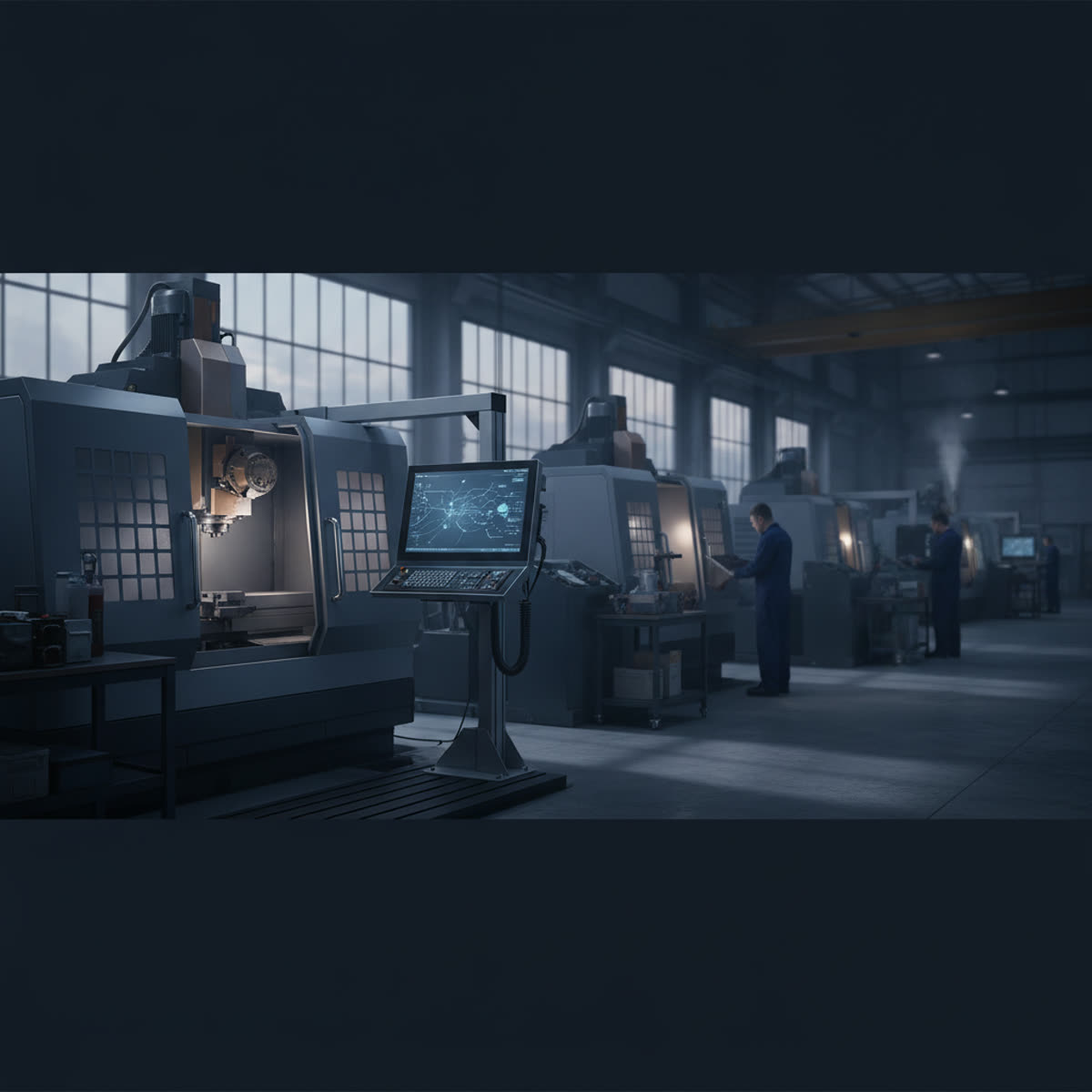
In the world of manufacturing, where competition and cost pressures are constantly increasing, experience and intuition, while still valuable, are no longer sufficient on their own. The goal of achieving operational excellence must be based on concrete facts, not on estimates or assumptions. This is where a manufacturing data collection system, one of the cornerstones of a modern production business, comes into play. This system acts as a mirror, showing you what is happening on the shop floor in numbers, free from assumptions, supporting your decisions and revealing opportunities for improvement.
For many SME managers, concepts like data collection and digitalisation can seem like distant goals that require large budgets and complex technological infrastructures. However, establishing a data collection system in manufacturing does not necessarily mean making a huge technology investment. It is, above all, a methodological process. By following the right steps, businesses of all sizes can transition to data-driven management in line with their own resources and needs. This journey begins by focusing on strategy, planning, and the human factor, rather than on technology. In this article, we will discuss, step by step, how to set up an effective data collection system in a manufacturing facility.
Define Objectives and Scope: What Should You Measure, and Why?
The most common mistake made when starting the data collection process is trying to collect every piece of data possible. This approach quickly leads to a mountain of data, unanalysable information, and a loss of motivation. Therefore, the first and most critical step is to clearly define what you will measure and why. Ask yourself this question: What is the single most important question about my business I would like an answer to right now? Is your goal to reduce unplanned downtime, decrease the scrap rate on a specific machine, or shorten order cycle times? Your answer will also determine the Key Performance Indicators (KPIs) you need to measure.
For example, if your objective is to reduce machine downtime, you need to collect data such as downtime duration, reason for downtime, and the start and end times of the stoppage. If you want to improve quality, you should focus on information like the number of scrap parts, the reason for scrap, and the station where the defect occurred. Keeping the scope limited at the beginning is key to success. Instead of trying to change the entire factory at once, select a production line or a machine that you consider most problematic as a pilot area. This narrowed scope makes it easier to manage the process, see results quickly, and roll out the system more efficiently with the lessons learned.
Analyse and Map Current Processes
Once you have decided what to measure, you need to deeply understand the existing workflows where this data originates. Data is an output of a process, and it is impossible to interpret data correctly without understanding the process itself. At this stage, it is essential to go to the shop floor (Gemba) instead of sitting in the office, and to talk to operators, supervisors, and the maintenance team. Observe all the steps a product or a work order goes through from raw material to finished product. How does the material flow? How is information communicated? At which points do delays occur? Who makes which decisions, and based on what?
Drawing simple flow charts or process maps during this analysis helps to visualise all the steps and their interrelationships. On this map, mark the critical points that affect the KPIs you identified in the first step. The data collection points will usually be these critical steps. For instance, if you want to measure the cycle time on an assembly line, you need to clearly define the points where the part enters and exits the line. Documenting your processes in such detail not only helps you identify data collection points but also allows you to see inefficiencies you were not previously aware of. Creating an effective operations map forms the basis of this process.
Select Data Collection Methods and Technologies
After understanding the process and identifying the data collection points, it is time to answer the 'how'. Data collection methods range from fully manual to fully automated, and the right choice is directly related to your company's budget, existing infrastructure, and objectives.
- Manual Methods: Paper forms, shift reports, and Excel spreadsheets filled in by hand by operators fall into this category. The initial cost is almost zero, and it can be implemented immediately. It can be the first step in building a data collection discipline, especially for an SME just starting its digitalisation journey. However, the disadvantages are significant: it is prone to human error in data entry, the data is not real-time, and the collected data needs to be transferred back to a digital format for analysis.
- Semi-Automated Methods: In this approach, tablets, industrial PCs, or barcode/QR code scanners are placed on the shop floor. Operators enter data through simple forms on these devices instead of on paper. Compared to the manual method, this reduces data entry errors, ensures data is collected in a more organised and centralised manner, and provides faster access to the data.
- Automated Methods: This involves pulling data directly from the machines' control units (PLCs) or from retrofitted sensors (IoT sensors) without human intervention. This method provides the most accurate, reliable, and real-time data. Parameters such as production count, cycle time, machine downtime, temperature, and pressure are recorded automatically. Although the initial investment is higher than other methods, it removes the data collection burden from the operator and ensures data impartiality, providing the greatest long-term benefit.
For most SMEs, the best approach is often a hybrid model. While aiming for automated data collection for critical machines, tablet-based semi-automated systems can be used on assembly lines where manual operations are prevalent.
Establish Data Infrastructure and Software
Regardless of the method you use to collect data, it needs to be stored, processed, and visualised somewhere to become meaningful. The collected data should flow into a central database located on a server. This database ensures that data is stored in a structured and consistent way. At this stage, data cleaning and standardisation are critically important. For example, if different operators enter the same reason for downtime with different names (e.g., "mould failure," "mould maintenance," "mould issue"), the analysis becomes meaningless. Therefore, data entry standards must be defined from the outset.
The software layer is what makes the raw data collected in the database meaningful for decision-makers. A Manufacturing Execution System (MES) or custom-developed reporting tools process this raw data and transform it into meaningful graphs, tables, and dashboards. The factory manager can monitor the real-time OEE (Overall Equipment Effectiveness) value from their screen, while a shift supervisor can review the downtime reports for the line they are responsible for. These visual tools encourage data-driven conversation and problem-solving. Building this infrastructure should hold a strategic place within your company's overall digital transformation roadmap.
Pilot Implementation and Team Training
Once the theoretical planning and infrastructure preparations are complete, it is time to implement the system in your chosen pilot area. The pilot implementation allows your plan to be tested under real-world conditions and enables any shortcomings or potential problems to be identified before committing to a large-scale investment. This phase is not just about testing the technology, but also about managing organisational change.
The most critical success factor in this process is team training. Operators, supervisors, and managers must clearly understand why this new system is being installed, what benefits it will bring them, and how to use it. The message that this system is a "helper tool" to make their jobs easier and help them solve problems faster, not a "monitoring tool," must be communicated correctly. Training should cover not only the technical use of the system but also what the collected data means and how to interpret it. Getting continuous feedback from the team during the pilot process is vital for improving the system and ensuring employees take ownership of it. Remember, even the best technology cannot succeed without the support and participation of the team that will use it. For a successful pilot, turning data collection methods into operational standards is important for sustainability.
Rollout and Continuous Improvement
With the success achieved in the pilot area, the lessons learned, and the experience gained by the team, you can now move on to the stage of rolling out the system across the entire factory. The challenges you encountered during the pilot will make your rollout plan more realistic. You will now have a clearer idea of which machines to prioritise, which training methods are more effective, and what adjustments need to be made to the infrastructure. The rollout should proceed methodically by repeating the steps of the pilot project for other lines and departments.
However, it must not be forgotten that installing and rolling out a data collection system is not the end of the project, but the beginning. This system is a living entity that needs to be constantly developed. The collected data must be analysed regularly, improvement actions must be taken, and the results must be tracked. Over time, the KPIs you initially set may lose their importance, or new objectives may emerge. The system should be flexible enough to adapt to these changing needs. You might decide to automate a data collection point that started as manual, or to add a new sensor to monitor a parameter you could not measure before. The goal is not data collection itself, but to use the collected data to create a culture of continuous improvement (Kaizen) and to move with determined steps towards operational excellence.
Conclusion
Establishing a data collection system in manufacturing is much more than a technology project; it is a transformation of management philosophy and business practice. The process is less about large budgets or the latest technology, and more about setting a clear objective, understanding current processes, choosing the right methodology, involving the team, and starting with small steps to achieve continuous improvement. For SMEs, this journey is one of the most strategic steps they can take to get ahead of the competition, increase efficiency, and ensure sustainable profitability. When used correctly, data has the potential to become one of your business's most valuable assets.