Turkey SME Digital Transformation Guide: 5 Steps for Manufacturing
A practical digital transformation guide for Turkish SMEs in manufacturing: priorities, a 5-step roadmap and common implementation risks.
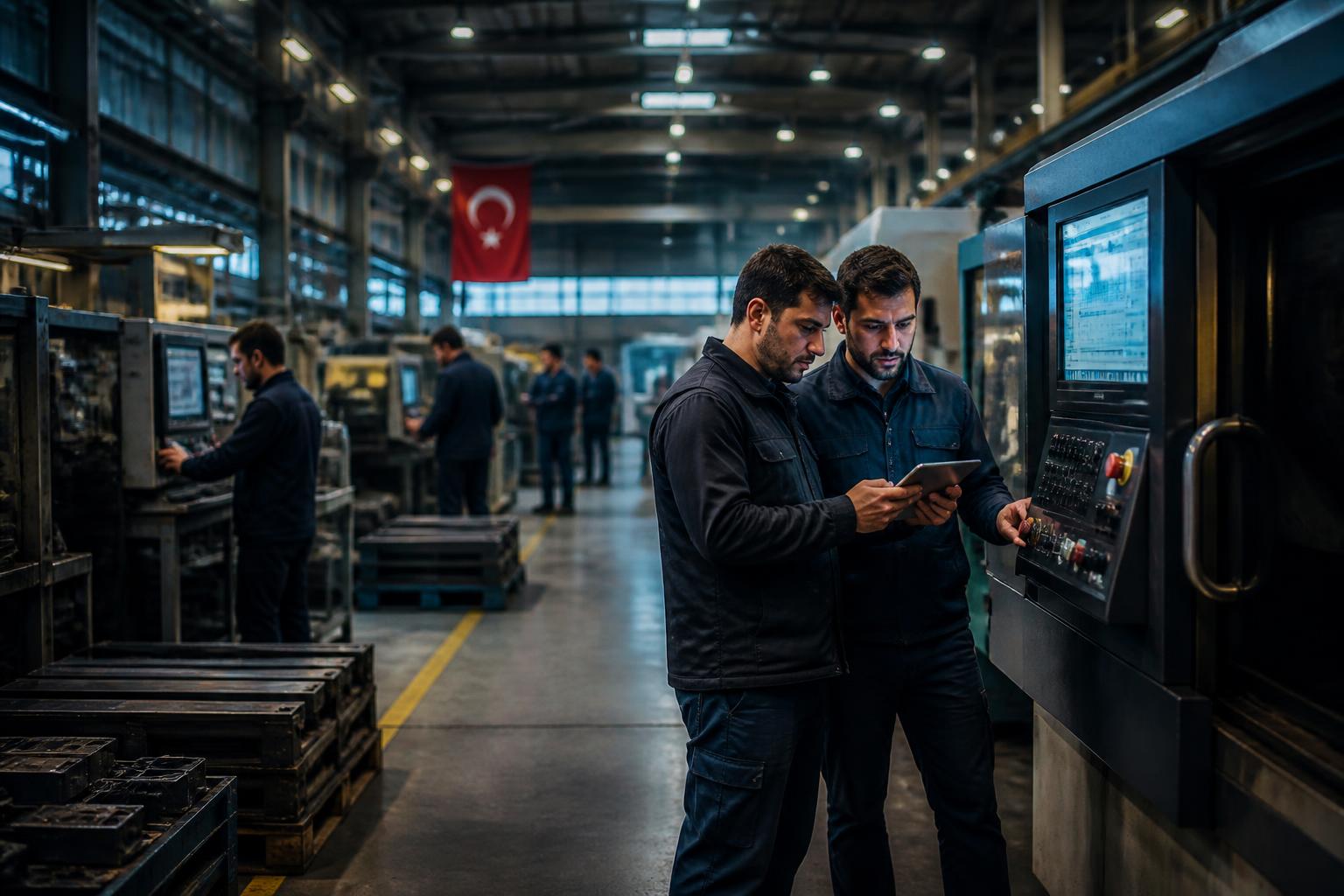
Many SMEs begin digitalization not by purchasing software, but by reacting to problems as they escalate. If production planning is done in Excel, purchasing is managed in messaging groups, and field tracking depends on individuals, the issue isn't a lack of technology but of operational design. This digital transformation guide for Turkish SMEs, especially for manufacturing and industrial businesses, was created to move digitalization beyond a buzzword and turn it into a manageable business program.
Why does a digital transformation guide for Turkish SMEs require a different approach?
Most SMEs in Turkey operate under multiple pressures simultaneously. Their cash flow is sensitive, human resources are limited, and decisions are made quickly, but their processes are often dependent on individuals. This is why digital transformation plans copied from large-scale corporations often fail to resonate on the ground.
For an SME, the right approach is not to build the most comprehensive system, but to make the most critical bottleneck visible. From order to shipment, which step creates delays, what data is re-entered, and which approval mechanism slows down work? The transformation begins here. Technology is the tool for achieving this visibility and standardization.
The picture is even clearer on the manufacturing side. If the flow of information is disconnected between the workshop, warehouse, purchasing, quality, and finance, a software investment alone will not yield results. First, the process architecture must be clarified, and then the appropriate digital layer can be built upon it.
The first goal in digital transformation is control, not technology
A common mistake managers make is equating digital transformation with automation. However, when implemented without established controls, automation only accelerates errors. Moving a fragmented process to a digital environment does not make it efficient. It just makes hidden costs more systematic.
Therefore, the initial goal is threefold: data integrity, process clarity, and decision visibility. If a business owner or operations leader cannot provide clear answers to the following questions within the same day, digitalization must first close these gaps: Which order is waiting and where, which resource is creating a bottleneck, which customer is at risk of a delivery delay, and which operation is causing rework?
The critical point here is that not every process can be digitized at once. A good transformation program selects the two or three processes that most limit the company's growth. The rest is left for later phases. This approach is more realistic and also reduces team resistance.
The right starting point for manufacturing and industrial SMEs
The starting points that generate the most value on the ground are often concentrated in similar areas. These include the transition from quote to order, production planning, stock visibility, work order tracking, quality records, and the task flow of field teams. This is because disconnects in these areas directly impact lead times, waste, and customer satisfaction.
However, the priority is not the same for every business. For a company with a high order volume but a relatively standard product structure, planning and stock management may be more prominent. For a project-based business with highly variable production, work order discipline and inter-departmental information flow might be more critical. In short, the right starting point depends less on the industry and more on the operational model.
Another important issue is the realistic assessment of existing tools. Some SMEs believe their current systems are inadequate, when in fact the problem lies not with the software itself, but with the discipline of its use. In others, the toolset is genuinely insufficient, and the manual workload stalls growth. This distinction must be made clearly. Otherwise, investments are made, but behaviors do not change.
A 5-step roadmap for a Turkish SME digital transformation guide
1. See your current operations as they are
The first step is to map processes as they actually are, not as they ideally should be. How is an order opened, who does information flow to, how many times is data entered manually, and at what point does phone traffic take over? This exercise is not a theoretical process design; it's an x-ray of the daily operations.
At this stage, managers need to look not only at reports but also at the shop floor. Many bottlenecks emerge not in presentations, but during shift changes, at warehouse dispatch, or in small tasks awaiting approval.
2. Prioritize based on business impact
Not every problem carries the same weight. Some disruptions are annoying but don't stop growth. Others have a direct impact on capacity, delivery, and profitability. Therefore, when prioritizing, the following criteria are useful: time loss, rework rate, customer impact, management visibility, and team dependency.
Proper prioritization elevates the project from a technical exercise to a management issue. This, in turn, strengthens ownership of the transformation.
3. Don't digitize without standardizing the process
If a task has no clear owner, if data entry rules are not defined, and if exceptions are not managed, it is too early to install software. First, the basic business rules must be clarified. What data is mandatory, at which stage is approval required, and who gets involved in which situation? This is where the standard is established.
This step is often overlooked because it doesn't seem like a technology task. Yet, lasting results are achieved right here. Systems are poor at managing ambiguity, but they provide significant speed in well-defined processes.
4. Start with a small but measurable application
Trying to transform the entire company at once creates unnecessary risk, especially at the SME scale. It is better to choose a pilot area instead. For example, you could start with an area like digital tracking of production orders, standardization of the quote-to-order flow, or managing field tasks on a single screen.
The purpose of a pilot application is not just to answer the question "does the system work?" The main goal is to observe team adoption, test data quality, and confirm whether managerial visibility has truly increased.
5. Establish governance and don't leave the project without ownership
The most common reason for digital transformation projects to slow down is not technical issues, but the breakdown of the decision-making mechanism. Who sets priorities, who approves change requests, and who tracks the results? When this framework is not established, the project gets delayed, scope creep occurs, and team trust is eroded.
In SMEs, governance doesn't have to be cumbersome. Regular reviews, clear responsibilities, and measurable goals are often sufficient. The important thing is not to let the project fall off the agenda.
The most common mistakes and their real costs
The first mistake is leaving the transformation solely to the IT team. However, the problem is usually within the business processes. If operations, production, finance, and management are not at the same table, the technical solution does not represent the whole picture.
The second mistake is allowing each department to choose its own tools. It seems practical in the short term, but over time, data becomes fragmented. After a while, there is no single source of truth in the business. Reports are debated, and decisions are delayed.
The third mistake is mistaking employee resistance for a personal issue. Teams often resist not the technology, but the uncertainty. If roles are changing, if performance is becoming more visible, or if old habits are ending, this change must be managed. Training alone is not enough; the rationale for the process must be clearly explained.
How to choose the right technology?
The right technology is not the tool with the most features. The right tool is one that simplifies current operations, disciplines data entry, and increases management visibility. Therefore, three questions are decisive when making a choice: Does the system fit the reality of use on the shop floor, does it produce meaningful data for management, and will it create new complexities as the business grows?
Additionally, integration needs should be evaluated early. A solution that works for a single team today may need to share data with different departments six months from now. Therefore, technology decisions should be made not only based on today's needs but also on the near-term operational model.
In some cases, seeking external strategic and implementation-focused support can accelerate the process. This approach provides more controlled progress, especially for businesses with gaps in both process design and digital implementation. Models that combine consulting with a feasible operational infrastructure, like those from Smartia Solutions, produce more value here; because the challenge is not just to say what needs to be done, but to implement it in a way that fits the rhythm of the business.
A final note for managers who want to get results
Digital transformation is less about adding technology to your company and more about reducing uncertainty. When it's clear how work gets done, when data becomes reliable, and when the decision-making process is visible, growth becomes less dependent on individuals. This is the real gain for an SME: not to build a more complex structure, but to create a more controlled and scalable business.