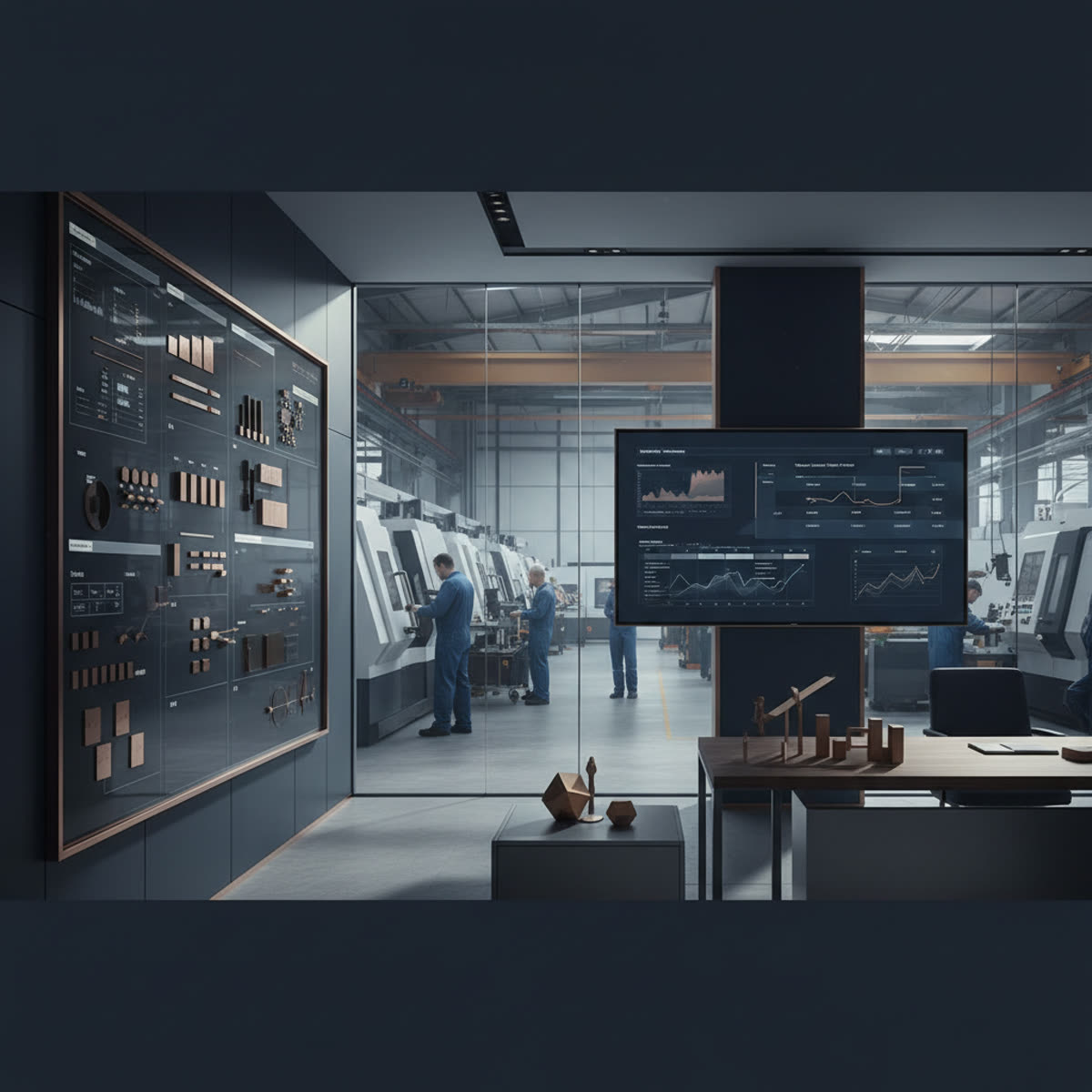
How to Achieve Cost Visibility in Operations
For manufacturing SMEs, turning costs from a black box into a transparent, manageable element is the foundation of data-driven leadership. Learn the steps.
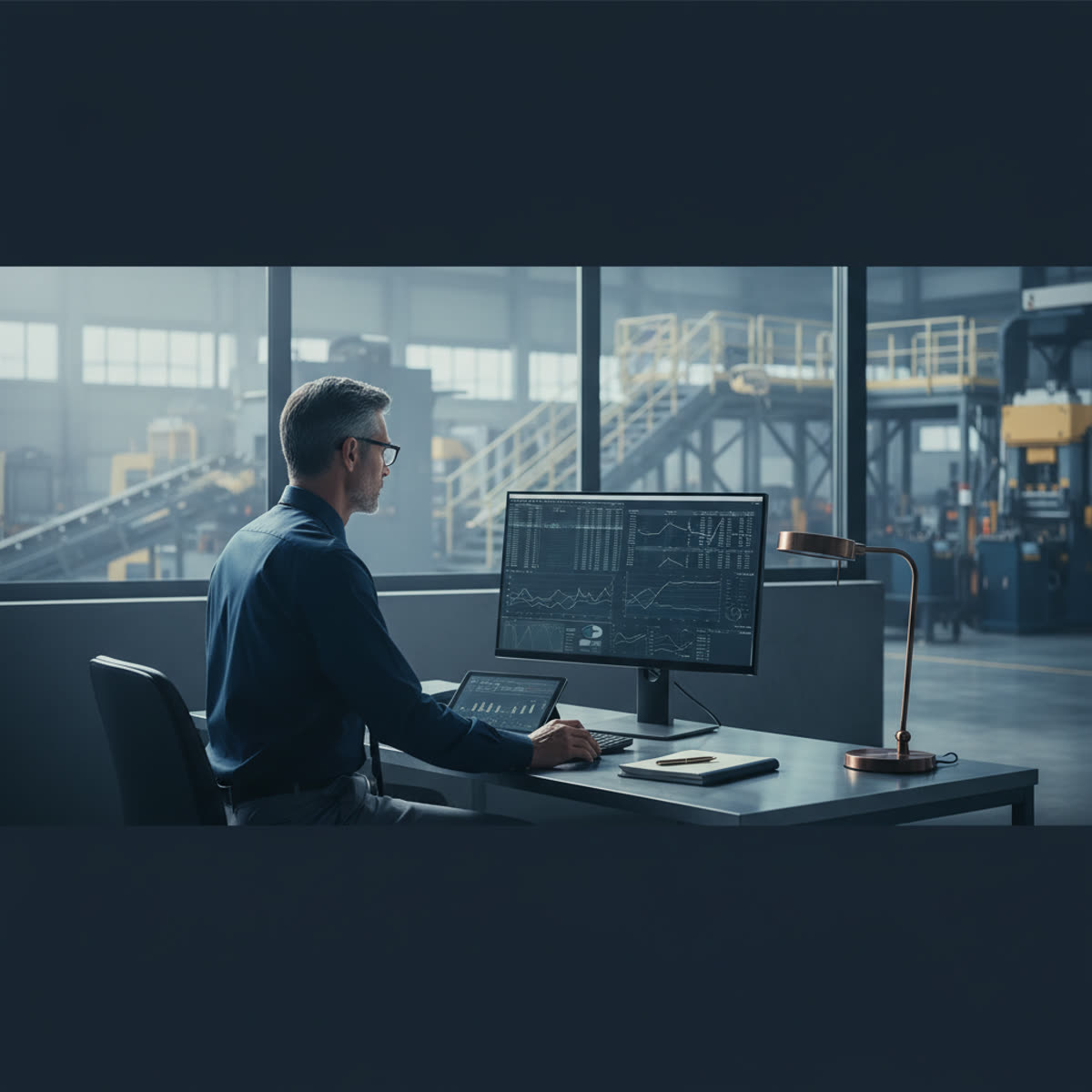
In today's increasingly competitive manufacturing and industrial sectors, sustaining profitability and making strategic decisions depends on a true understanding of the cost structure. For many SME managers, operational costs are merely figures on month-end accounting statements. However, it is difficult to understand which processes and inefficiencies lead to these figures. It is at this point that the concept of cost visibility in operations ceases to be an accounting term and becomes a strategic management tool. Cost visibility is the ability not just to know how much you spend, but to understand, analyse, and optimise why and where that spending occurs.
A lack of this visibility can lead businesses to hidden losses and flawed decisions. For instance, pricing set without knowing how profitable each product truly is, investment planning done without seeing the impact of a machine's unplanned downtime on total costs, or personnel management performed without understanding which shift is less productive, all weaken a company's competitive edge in the long run. Transforming costs from a black box into transparent, manageable elements forms the basis for transitioning from a reactive management style to proactive, data-driven leadership. In this article, we will discuss the steps and approaches to achieving cost visibility in manufacturing operations.
Understanding Cost Elements: Beyond Just the Numbers
The first step in achieving cost visibility is to correctly identify all the elements that constitute your costs. Traditional accounting approaches often focus on obvious costs like direct materials and direct labour. However, the cost structure of a modern manufacturing operation is far more complex. True visibility requires going beyond these direct costs to uncover indirect and often "hidden" costs.
Energy consumption is chief among these elements. Knowing how much energy each machine consumes in which process is critical data, especially in periods of high energy costs. Similarly, machine setup times, unplanned downtime, and maintenance and repair activities are significant cost items. The cost of poor quality is perhaps the most hidden of all. Scrap and rework activities mean not only a loss of material and labour but also a loss of machine time, energy, and capacity. Without measuring these costs, it becomes impossible to see the financial impact of quality improvement efforts. Therefore, the work must begin by listing all these potential cost items and identifying their sources within the operation.
Process Mapping and Identifying Data Collection Points
The most effective way to understand where costs are generated is to map your operational processes in detail from start to finish. A process flow that includes every step, from raw material entry to product shipment, visualises the points where costs originate. The answer to the question of how to create an operational map for an SME forms the foundation of this quest for visibility. This map should include not only the physical flow but also the information flow and decision points.
Once the process map is complete, the next critical step is to determine where and how cost-related data will be collected at each process step. For example, what data is important for a part being processed on a CNC machine?
- Job start and end time (For labour and machine time cost)
- Cutting tool information and usage duration (For consumable cost)
- Instantaneous and total energy consumed by the machine during the process (For energy cost)
- Number of good and scrap parts produced (For the cost of poor quality)
Defining these data collection points and methods (manual forms, barcode scanners, sensors, machine control panels, etc.) transforms abstract cost items into tangible, measurable data. It can be challenging to collect data for all processes at the outset. Therefore, a more manageable approach is to start by selecting a pilot process that is deemed most critical or problematic and then expand the system based on the experience gained.
Standard Costing and Variance Analysis
Collecting data is only one part of the equation. To make this data meaningful, a reference point is needed. This reference point is called the "standard cost." A standard cost is a benchmark that defines how much a product or an operation should cost under ideal or expected conditions. Establishing this standard is possible through engineering calculations, analysis of historical data, and process improvement efforts. The answer to the question of how to establish robust operational standards will form the backbone of an effective cost control system.
Once standards are set, the actual incurred costs are compared against them. The difference is called "variance." Variance analysis is one of the most powerful tools for cost visibility. For example, if the actual labour cost of a production order is 20% higher than the standard labour cost, you begin to investigate the reasons. Possible causes could be:
- The operator lacking sufficient experience
- Unexpected minor faults occurring on the machine
- The process slowing down due to the poor quality of the material used
- An error in production planning
This analysis shifts management's focus from the question "is everything okay?" to "why did we get a different result than planned?". This, in turn, encourages getting to the root causes of problems to produce lasting solutions.
Leveraging Technology: Choosing the Right Tools
While collecting and analysing data manually may be a starting point for small-scale operations, it is not sustainable or scalable. Today, achieving cost visibility in operations depends largely on the use of the right technologies. Enterprise Resource Planning (ERP) systems provide a general framework by bringing together material, financial, and production planning data. However, they are often insufficient on their own for collecting real-time, detailed data from the shop floor.
This is where Manufacturing Execution Systems (MES) come into play. An MES integrates directly with machines, operators, and sensors on the production floor to record in real time who did what job, when, on which machine, in how much time, and with how much waste. These systems enable real-time comparison of actual costs with standard costs and immediate detection of variances. Integrating existing ERP or other software with such modern systems eliminates data silos and provides holistic visibility. In this process, an enterprise software modernisation project to enhance the capabilities of or replace legacy systems can be one of the most important steps in digital transformation.
Cultural Change: Embedding Cost-Consciousness Across the Organisation
Even if you install the most advanced systems, if you do not foster a culture of cost-consciousness within the organisation, the data you obtain will remain nothing more than figures in reports. Cost visibility is not a project for top management or the finance department alone. For it to be successful, everyone from the operator on the floor to the workshop supervisor, from the planning specialist to the maintenance personnel, must be part of this process.
To build this culture, it is necessary to explain to employees the impact of their work on costs in simple, understandable terms. For example, showing a machine operator the hourly energy cost of running a machine unnecessarily idle or the financial value of scrap produced due to an incorrect setting is far more effective than an abstract goal to "reduce costs." Linking Key Performance Indicators (KPIs) to cost elements and encouraging and rewarding improvement suggestions helps this consciousness spread throughout the organisation. It should not be forgotten that it is people who make data meaningful and turn it into action.
Conclusion
Achieving cost visibility in operations is not a task to be completed overnight but a strategic journey requiring continuous improvement. This journey begins with correctly identifying cost elements, continues with mapping processes and establishing a data collection infrastructure, and is managed through technology-supported analysis. Most importantly, however, all these technical steps must be supported by an organisational culture of cost-consciousness. When you stop seeing your costs as a burden and start seeing them as opportunities for improvement, you will have opened the door to sustainably increasing your company's competitive advantage and profitability.