Where AI Adds Value in SME Operations
AI is no longer a distant goal but a practical tool for SMEs, offering tangible benefits when focused on solving specific operational challenges.
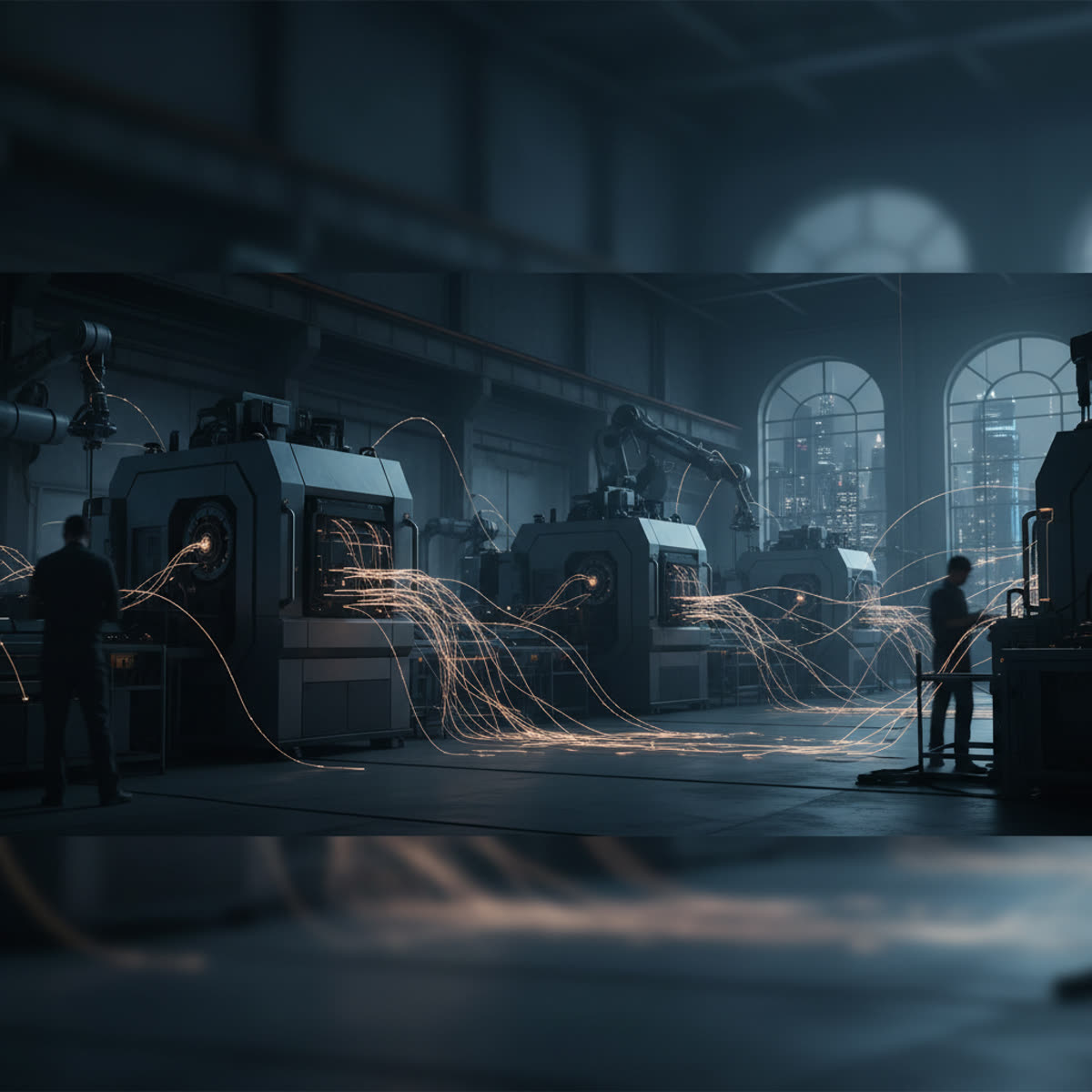
The term 'artificial intelligence' has become one of the most frequently heard concepts in the business world in recent years. The multi-billion dollar investments by large technology companies, grand future visions, and complex algorithms can make the subject seem like a distant and costly goal, especially for SMEs operating in manufacturing and industry. However, contrary to this perception, the use of artificial intelligence in SME operations is a practical tool that provides tangible and measurable benefits when focused on the right areas. The issue is not to equip everything with AI at once, but to leverage this technology to solve specific problems that will increase operational efficiency, reduce costs, and create a competitive advantage.
This technology should be seen as a tool, not a destination. Just like investing in a more efficient machine or hiring a more competent manager, artificial intelligence solutions are systems designed to solve specific business problems. Tasks such as detecting a defect on the production line, forecasting the next month's order volume, or predicting when a machine will fail are now responsibilities that AI can successfully undertake, even at an SME scale. The key is to correctly identify where this technology will create the most value within your business.
Understanding Artificial Intelligence: A Practical Perspective for SMEs
There is no need to get bogged down in complex technical definitions to understand artificial intelligence (AI). For an SME manager, AI is essentially a set of technologies with three main capabilities: learning, prediction, and automation. Traditional automation systems operate based on predefined, rigid rules ("If A happens, do B"). Artificial intelligence, on the other hand, can create these rules for itself by learning from data or adapt them dynamically according to current conditions.
For example, an Excel macro is a simple form of automation. It repeats the same steps every time. An AI-powered system, however, can forecast future demand by analysing past sales data, seasonal trends, and even fluctuations in raw material prices. This forecast is not based on a static rule, but on a model that is constantly updated and learning. For SMEs, the power of AI lies in this dynamic learning and adaptation capability. It combines human intuition and experience with the capacity to process large datasets, enabling more accurate decision-making.
Production Planning and Optimisation
For a manufacturing SME, one of the most critical processes is the efficient planning of resources. Decisions such as which order will be produced on which machine, when, and by whom directly affect the company's profitability. Variable customer demands, unexpected machine breakdowns, and delays in raw material procurement make this planning extremely complex.
Artificial intelligence is a powerful tool for managing this complexity. By analysing information such as historical production data, order history, and machine performance records, it can create more realistic and optimised production schedules. For instance, an AI model can account for the production times of different products, machine changeover (setup) times, and staff competencies to suggest the most efficient workflow that will minimise total production time or eliminate bottlenecks. Before embarking on this type of optimisation, it is crucial to clearly define the existing processes. To understand your business's current workflows, creating an operations map is a fundamental step before implementing advanced technologies like AI.
Improving Quality Control Processes
Quality is vital for the reputation and sustainability of a manufacturing business. Traditional quality control methods often rely on inspection by the human eye. However, this method can be slow and is prone to error due to operator fatigue or distraction. Detecting minor defects or minimal deviations from the standard can be particularly challenging for the human eye.
This is where a sub-field of artificial intelligence known as 'computer vision' comes into play. High-resolution cameras placed on the production line capture images of products in real-time. The AI model is trained on thousands of images of 'correct' and 'defective' products, enabling it to detect even the slightest deviation from the norm within seconds. Defects such as a weaving error in fabric, a scratch on a metal part, a printing mistake on packaging, or a colour difference in a food product are automatically flagged by the system. This not only raises quality standards but also reduces scrap and return rates by preventing faulty products from reaching the customer.
Supply Chain and Inventory Management
The question 'How much stock should I hold?' occupies the minds of many SME owners and managers. Too little stock leads to production disruptions and lost sales, while excess stock increases storage costs and ties up capital. Finding the right balance is particularly difficult, especially when managing hundreds of different raw materials and finished product items.
Artificial intelligence helps establish this balance by performing predictive analysis in inventory and supply chain management.
- Demand Forecasting: It creates more accurate demand forecasts for each product by analysing factors such as historical sales data, market trends, seasonality, and even promotional periods.
- Optimal Stock Levels: Based on these demand forecasts and supplier lead times, it determines the ideal minimum and maximum stock levels for each item. This automates the decision of 'when' and 'how much' to order.
These systems also help manage risks by monitoring supplier performance (e.g., delivery delay rates). Thus, a potential disruption from a supplier can be anticipated, allowing alternative plans to be activated. Effective inventory management yields the highest efficiency when built upon robust operational standards.
Predictive Maintenance
In industrial businesses, unplanned machine downtime is one of the biggest cost drivers. The unexpected failure of a single machine can halt not just its own production, but the entire production line. Traditional maintenance approaches are typically either breakdown maintenance (reactive) or preventive maintenance carried out at fixed intervals (periodic). While periodic maintenance reduces risk, it can be costly due to part replacements that may not yet be necessary.
Predictive maintenance is one of the areas where artificial intelligence provides the most tangible benefits. Sensors placed at critical points on machines continuously collect data such as vibration, temperature, pressure, and sound. The AI model analyses this data for deviations from the norm and hidden patterns that emerge before a failure. The system can generate specific alerts, such as, 'An excessive vibration pattern has started in the bearing of Motor B; there is a 90% probability of failure within 15 days.' This foresight allows the maintenance team to intervene during a planned shutdown before a failure occurs. This approach eliminates the costs of unplanned downtime and improves maintenance efficiency by preventing unnecessary part replacements.
Conclusion
Artificial intelligence is no longer a matter of science fiction for manufacturing and industrial SMEs, but a realistic and accessible set of tools that can be used to increase operational efficiency. From production planning and quality control to inventory management and predictive maintenance, it offers solutions that complement human capabilities and make decision-making processes data-driven. The key to success is not to start with large, complex projects, but to take small steps, targeting a specific problem where the business faces the most challenges and where the most value can be created.