Digital Checkpoints in Quality Management
Learn how digital checkpoints transform quality management from reactive detection to proactive assurance, reducing costs for manufacturing SMEs.
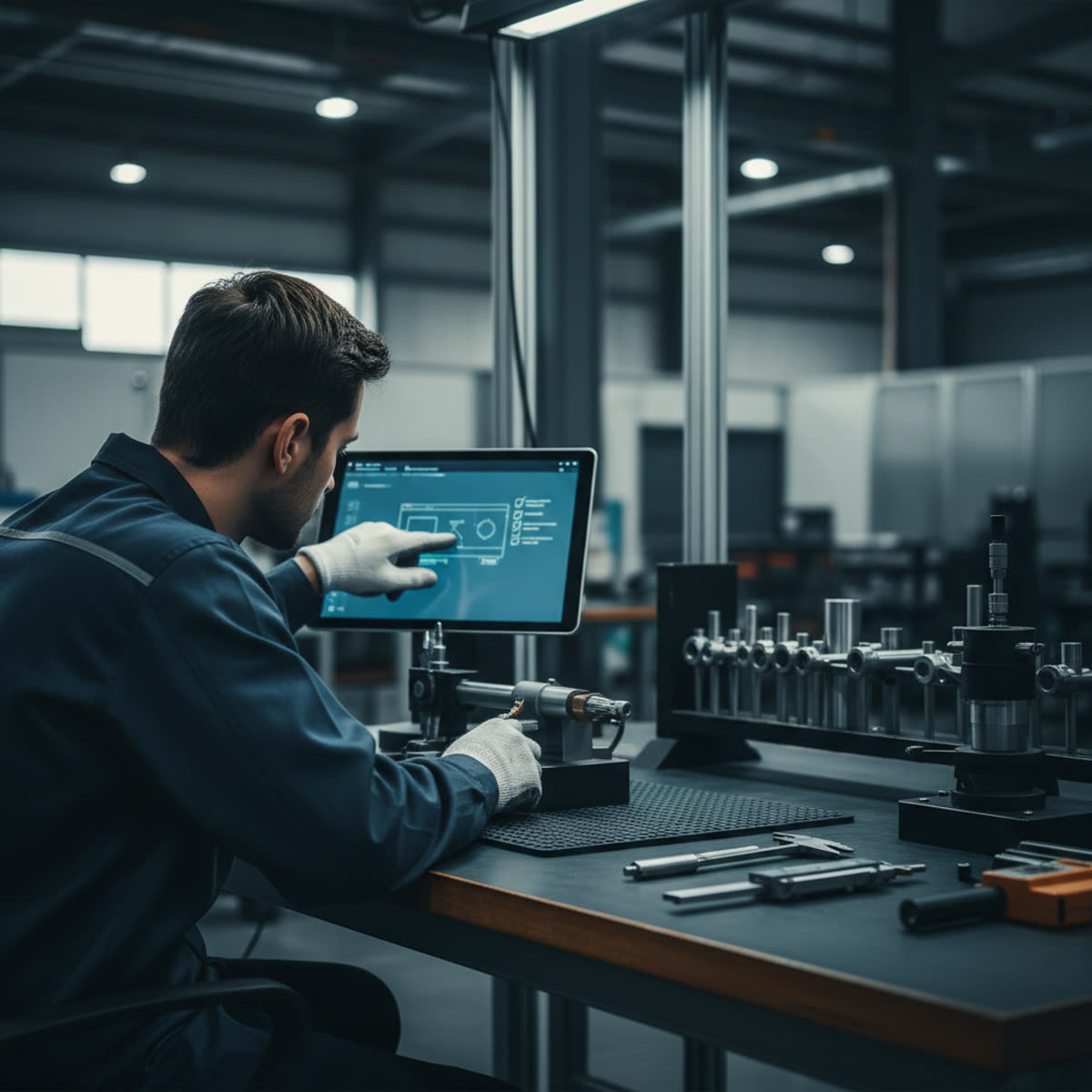
For a manufacturing business, the consistency of quality is vital for brand reputation and customer satisfaction. Quality control processes conducted with traditional methods usually focus on the final stages of production and are based on detecting faulty products. This reactive approach leads to both costly scrap and rework rates and the loss of valuable time. In contrast, the modern manufacturing philosophy aims to prevent defects from occurring in the first place, rather than simply finding them. It is at this point that the concept of digital checkpoints in quality management emerges as an efficient and sustainable solution for SMEs.
Digital checkpoints are strategic sensors, software, and procedures that convert physical events at critical steps of your production process into digital data. This means establishing a structure that can be instantly processed, monitored, and used to generate meaningful results, unlike data kept manually on paper forms, which are often archived without analysis. The goal is not to use technology for its own sake, but to position it as a tool to guarantee quality standards, detect deviations instantly, and continuously improve processes. This approach transforms quality from a cost centre into a lever for operational excellence.
The Transition from Traditional Quality Control to Digital Checkpoints
Traditional quality control processes typically rely on manual measurements and observations made by operators or quality personnel at specific intervals. These measurements are recorded on paper forms, signed, and filed. When a problem arises, these files are revisited in an attempt to conduct a root cause analysis. This method has several inherent challenges: human error in data entry, delays in transferring data to a central system for analysis, and the impossibility of detecting trends or minor deviations in real time.
Digitalisation fundamentally changes this picture. A digital checkpoint could be, for example, a sensor that continuously monitors the temperature of a mixing vessel or the pressure of a press machine. As soon as the data from this sensor moves outside predefined tolerance ranges, it sends an instant alert to the relevant operator or team leader. This provides the opportunity to intervene at the first sign of deviation, not after hundreds of faulty products have been made. This proactive intervention directly reduces scrap rates. As data is recorded automatically and without error, it becomes extremely easy to perform historical analysis, compare performance between machines, or measure the quality consistency of a specific shift.
How to Define Digital Checkpoints
Placing digital checkpoints in every corner of a facility is neither efficient nor economical. The correct approach is to strategically identify the critical points that have the most impact on the process. This process should be guided by a methodical analysis, not by arbitrary decisions.
The best way to start is by creating a detailed map of your existing production processes. An operations map visualises all the steps from raw material entry to the final product's exit, the relationships between these steps, and the flow of materials and information. On this map, Critical to Quality (CTQ) parameters that directly affect the final product quality are identified. These parameters can be variables such as temperature, pressure, speed, duration, humidity, viscosity, or the accuracy of a specific assembly step. Bottlenecks and process steps where quality problems most frequently occur, or have the potential to occur, stand out as candidates for digital checkpoints. For example, if viscosity and drying oven temperature are critical parameters in a painting process, then digital sensors and data collection mechanisms placed at these two points should be the first priority.
Technologies and Tools Used in Practice
The technologies available for SMEs to create digital checkpoints range from complex, high-budget systems to more accessible and modular solutions. What is important is to choose the tool that best fits the need.
-
Data Collection Tools:
- Industrial Internet of Things (IIoT) Sensors: These are smart sensors that measure physical parameters like temperature, pressure, vibration, and humidity, and send data wirelessly to a central system. They can be easily integrated into existing machinery.
- Machine Vision: Using cameras and specialised software, this technology detects surface scratches, colour differences, assembly errors, or missing parts on products much faster and more consistently than the human eye.
- Mobile Devices and Tablets: For control steps that operators perform manually but need to record digitally (e.g., visual inspection results, scanning a specific part's serial number), simple mobile applications replace paper forms.
-
Data Processing and Analysis Platforms:
- Manufacturing Execution Systems (MES): This software processes data collected from the shop floor in real time, manages production orders, and centralises quality control data.
- Enterprise Resource Planning (ERP) Software: Quality modules integrate the collected data with the company's other business processes (inventory, purchasing, shipping) to provide a holistic view.
- Business Intelligence (BI) Dashboards: These tools transform quality data from various sources into visually meaningful charts and reports, allowing decision-makers to easily see trends and anomalies.
The Operational Advantages of Digital Checkpoints
When correctly configured, digital checkpoints offer businesses significant operational benefits beyond just quality improvement. Chief among these is full traceability. A defect identified in a final product can be traced back in seconds to determine which batch of raw material it came from, on which machine, by which operator, and at what time it was produced. This greatly accelerates finding the root cause of the problem and preventing its recurrence.
Another key advantage is the standardisation of processes. Digital workflows and checklists ensure that every operator follows the same steps, in the same order, and according to the same standards. Supporting operational standards with digital tools reduces the risk of knowledge loss when an experienced employee leaves and shortens the adaptation period for new personnel. Furthermore, the collected data enables decisions based on concrete facts, such as "the vibration level of this machine has increased by 15% in the last 24 hours," rather than on assumptions like "I think there's a problem with this machine." This lays the groundwork for evolving from reactive repairs to proactive and predictive maintenance.
A Phased Approach for SMEs
Digital transformation does not mean equipping an entire factory with sensors overnight. Especially for SMEs with more limited resources, the best path is to adopt a phased and measurable approach. Rather than trying to transform the entire facility at once, selecting a single production line with the most issues or the most critical quality problem as a pilot project is the most sensible starting method.
In this pilot project, the defined digital checkpoints are installed, and the results obtained over a specific period (e.g., 3 months) are closely monitored. During this process, tangible metrics such as the reduction in scrap rates, the shortening of root cause analysis times, or the decrease in rework costs are measured. The success of the pilot project and its return on investment (ROI) will not only persuade the management team to make larger investments but also facilitate employee adaptation to the new system. The experience gained from a successful pilot provides a solid foundation and a roadmap for extending the transformation to other areas. This strategic planning is a crucial part of any digital transformation roadmap.
Conclusion
Creating digital checkpoints in quality management is no longer a luxury for manufacturing SMEs but a strategic necessity for maintaining competitiveness and efficiency. The transition from reactive control mechanisms run with pen and paper to data-driven, proactive quality assurance systems reduces scrap rates, increases traceability, and provides your business with long-term operational flexibility. This transition is a significant step that requires a well-thought-out strategy and the right choice of technology.