The Most Important Digital Investments for Factory Owners
The most important digital investments for factory owners: visibility, planning, maintenance, quality, field workflows and performance management — in the right order.
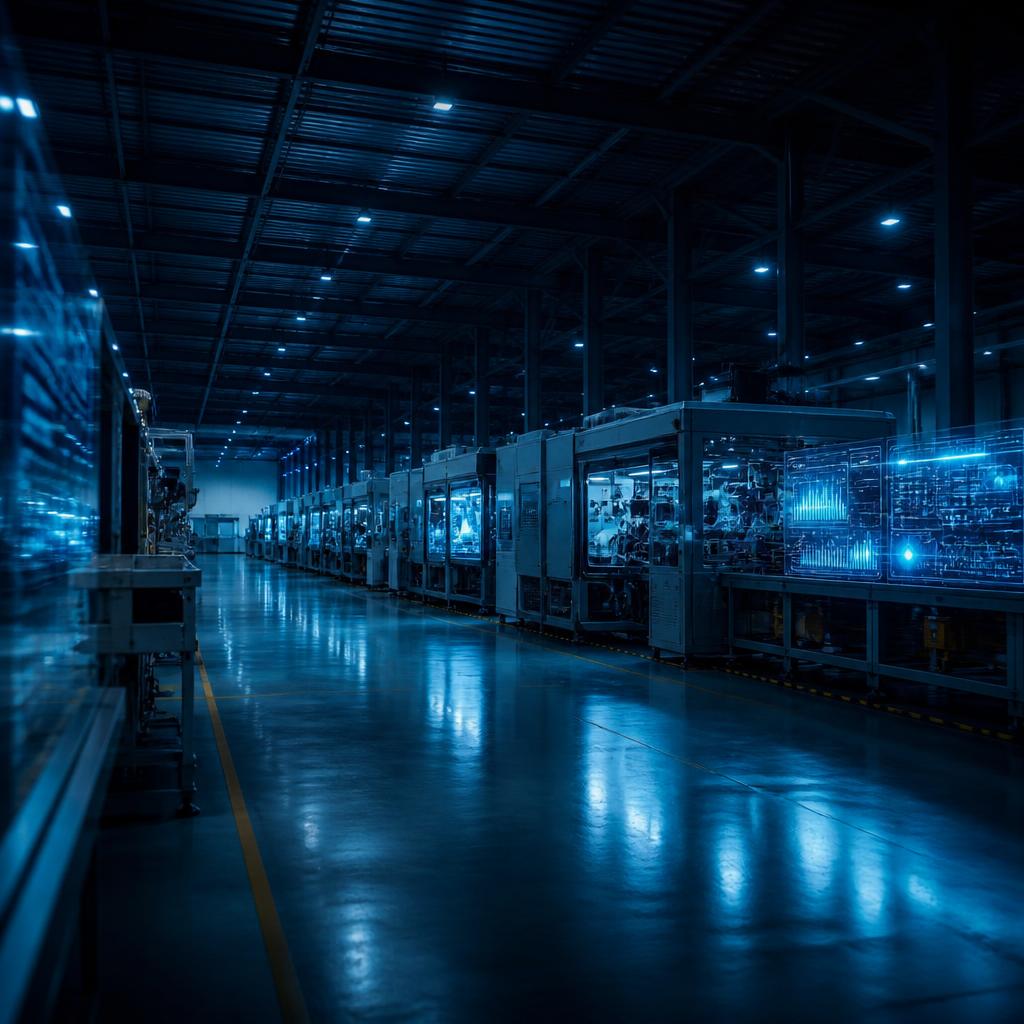
With shrinking production margins, pressure on delivery times, and difficulty accessing a qualified workforce, the most critical digital investments for factory owners are no longer a technology issue but a core management priority. The real question is not whether to invest in digital, but in which area, when, and in what order to invest. Because digitalization done in the wrong order drains budgets but fails to deliver results on the shop floor.
In many manufacturing businesses, the problem isn't a lack of technology but a fragmented structure. Orders are tracked in one system, the production plan is in another file, maintenance records remain on paper, and managers cannot access up-to-date data to make decisions. In this scenario, the goal of digital investment is not to install flashy systems, but to improve decision quality, make operations visible, and make growth less fragile.
Why have the most critical digital investments for factory owners changed?
In the past, when businesses thought of digital investment, they mostly considered office software or basic accounting systems. Today, the real need on the production side is much clearer: real-time visibility, standard workflows, data-driven planning, and an operational structure that reduces dependency on individuals.
Manufacturing SMEs, especially in Turkey, are facing multiple pressures simultaneously. On one hand, cost control is essential; on the other, customers expect greater speed and traceability. Additionally, as a business grows, processes that rely on the memory of the owner or a few key managers become inadequate. Therefore, the most valuable digital investments are not only those that solve today's problems but also those that enable the company to scale to the next level.
1. Systems that provide operational data visibility
A factory's first digital investment should not be the most brilliant technology. The initial need is to be able to monitor production, inventory, order, shipment, and work order data within a unified management logic. Because an operation you cannot see, you cannot manage.
The critical point here is not to try to build everything at once. Some businesses take on overly broad scopes, entering projects that last for months, which weakens team adoption of the system. A better approach is to first make the most critical bottleneck visible from a management perspective. For example, if delays are caused by planning, you need to monitor the production flow. If the problem is inventory discrepancies, material movements need to be disciplined.
A well-designed operational visibility structure provides management with clear answers to these three questions: What are we producing, how efficiently are we producing it, and where are we experiencing losses? Without these answers, other digital investments remain fragmented.
Collecting data isn't enough; it must support decisions
Many factories start collecting data but fail to connect it to their decision-making mechanisms. Screens are full, reports are generated, but the production plan is still made based on personal experience. In this case, the system produces information but not impact. The right investment is a structure that integrates management reporting with operational meetings, responsibilities, and action tracking.
2. Production planning and scheduling infrastructure
One of the areas with the fastest impact on profitability is planning. When capacity, shifts, deadlines, raw material availability, and machine readiness are managed in a disconnected manner, the result is usually the same: delays, overtime, unnecessary inventory, and a constant firefighting culture.
This is why production planning systems are high on the list of the most critical digital investments for factory owners. However, there is no single right answer here. The needs of a business with high product variety are different from those of a facility with repetitive production. While detailed scheduling is critical for some factories, even basic capacity visibility can make a huge difference for others.
The key point to consider when choosing planning software is how the team actually works. A system detached from the reality of the shop floor will not be used, even if it is technically powerful. An unused system is a cost, not an investment. A good structure must be able to process changes quickly, highlight bottlenecks, and establish a common language between sales and production.
3. Maintenance management and downtime reduction systems
In many factories, machine breakdowns are managed as if they were a matter of fate. However, unplanned downtime is not just an issue for the maintenance team; it means lost capacity, delivery risk, and increased costs. Therefore, digitalizing maintenance processes is a foundational investment, especially for businesses with an expanding machine park.
Digitalization in maintenance is not just about keeping a record of failures. It requires viewing equipment-based history, tracking periodic maintenance plans, controlling critical spare parts, and analyzing recurring failures. This shifts the maintenance team from a reactive to a planned structure.
Not every facility needs advanced predictive maintenance technology. While sensor investments and advanced analytics yield powerful results in some businesses, it is more appropriate for others to first establish basic maintenance discipline. The order of investment is important here. Moving to advanced technology before basic processes are in place often fails to deliver the expected returns.
4. Quality and traceability systems
A quality problem is not just about the cost of returns or scrap. It is also a matter of brand trust, customer relationships, and growth capacity. For factories that produce for specific industries, traceability is no longer a choice but an operational standard.
Thanks to digital quality management, non-conformance records, inspection results, lot tracking, and corrective actions become more systematic. This helps managers manage quality not only at the final stage but throughout the process. Seeing where the problem starts is far more valuable than just catching the defect at the final inspection.
The success of investments in quality depends on how integrated they are with production. If quality is managed like a separate island, data accumulates, but improvement remains limited. The most effective structure is one where quality data directly influences planning, production, and shipping decisions.
5. Mobile and digital workflows that standardize shop floor operations
One of the main reasons that makes it difficult for a factory to scale is that work is overly dependent on individuals. If the master craftsman is there, the process flows; if not, it falters. While this may seem practical in the short term, it creates a serious risk during the growth phase. Because the knowledge is in people's minds, not in the system.
This is why digital forms, mobile approval workflows, standard task lists, and field data collection systems are so valuable. When shift handovers, maintenance notifications, quality approvals, or warehouse movements are tracked with a certain discipline, the operation relies on the system, not the person. This provides manageability.
Balance is important here. Overloading the shop floor with too many screens and forms can have a counter-effect. Good design collects data without slowing down the operator and produces information that the manager will actually use. If digitalization makes work on the shop floor more difficult, the process should be redesigned.
6. Reporting and performance infrastructure that empowers management decisions
Many businesses have reporting, but no management system. The tables received at the end of the month show the past; however, what factory management needs is to receive information within a time window that allows for intervention. Growth cannot be kept under control without regularly tracking metrics such as efficiency, OEE-like performance indicators, on-time delivery, scrap rate, downtime reasons, and order load.
The goal here is not to set up more dashboards, but to create a common management rhythm. What data will be reviewed, how often, who will take action, and how will deviations be evaluated? If there are no answers to these questions, the reporting investment creates a showcase effect but produces no performance.
A good performance infrastructure also reduces dependency on the boss. Because decisions are based on shared, visible data, not intuition. This makes a huge difference, especially for businesses managing multiple lines, facilities, or teams.
How should prioritization be done?
It is not right for every factory to follow the same digital investment list. The correct priority is determined by the business's bottleneck. If delivery performance is weak, planning takes precedence. If inefficiency is not visible, data collection and reporting are needed first. If operations are person-dependent, standardizing shop floor workflows becomes more critical.
Therefore, it is necessary to conduct an operational diagnosis before choosing a technology. Which processes are fragmented, which decisions are being made without data, and at which point is the cost of error high? Software decisions made without a disciplined evaluation can quickly become an additional burden.
The approach that Smartia Solutions emphasizes when working with manufacturing businesses provides value right here: building the system around the process before the tool, and the management logic before the software. Because lasting digital transformation begins not with buying screens, but with making operations measurable.
Common signs of a poor investment
It is not difficult to tell when a digital investment is poorly designed. If the team does not want to use the system, if managers revert to their old Excel workflows, if the shop floor enters data but sees no improvement in return, or if reports do not lead to decisions, the problem is in the design, not the technology.
Additionally, trying to launch all modules at once is a common mistake. It appears to accelerate the transformation but increases the organizational burden. Proceeding in a more controlled manner—that is, achieving quick wins in critical areas and then expanding the scope—yields healthier results in most factories.
The quality of a digital investment is measured not by how much was spent, but by how much it increases management capacity. The right question for a factory owner is this: Does this system make my operations more predictable, more measurable, and less dependent on individuals?
Today, the most powerful digital investment is not the one with the most features, but the one that solves the factory's real bottleneck and lays the groundwork for the next stage of growth. A few clear steps taken in the right order produce far more value than a scattered digitalization program.